

AI search engines do not read your website the way humans do. They parse HTML, extract data from structured elements, and use machine learning to understand what your content is about. Schema markup (also called structured data) gives AI systems a clear, machine-readable map of your content. It tells them exactly what your page is about, who wrote it, when it was published, and what questions it answers. Pages with proper schema markup are significantly more likely to be cited by AI search engines.
In this guide, we will explain how schema markup works for AI search, which types matter most, and provide copy-paste JSON-LD examples for every common use case. Whether you run a blog, an e-commerce store, or a service business, structured data can improve your chances of being cited by ChatGPT, Perplexity, Google AI Overviews, and other AI platforms.
Before optimizing your structured data, make sure AI crawlers can actually access your site. Use the check your AI crawler status tool to verify your robots.txt configuration.
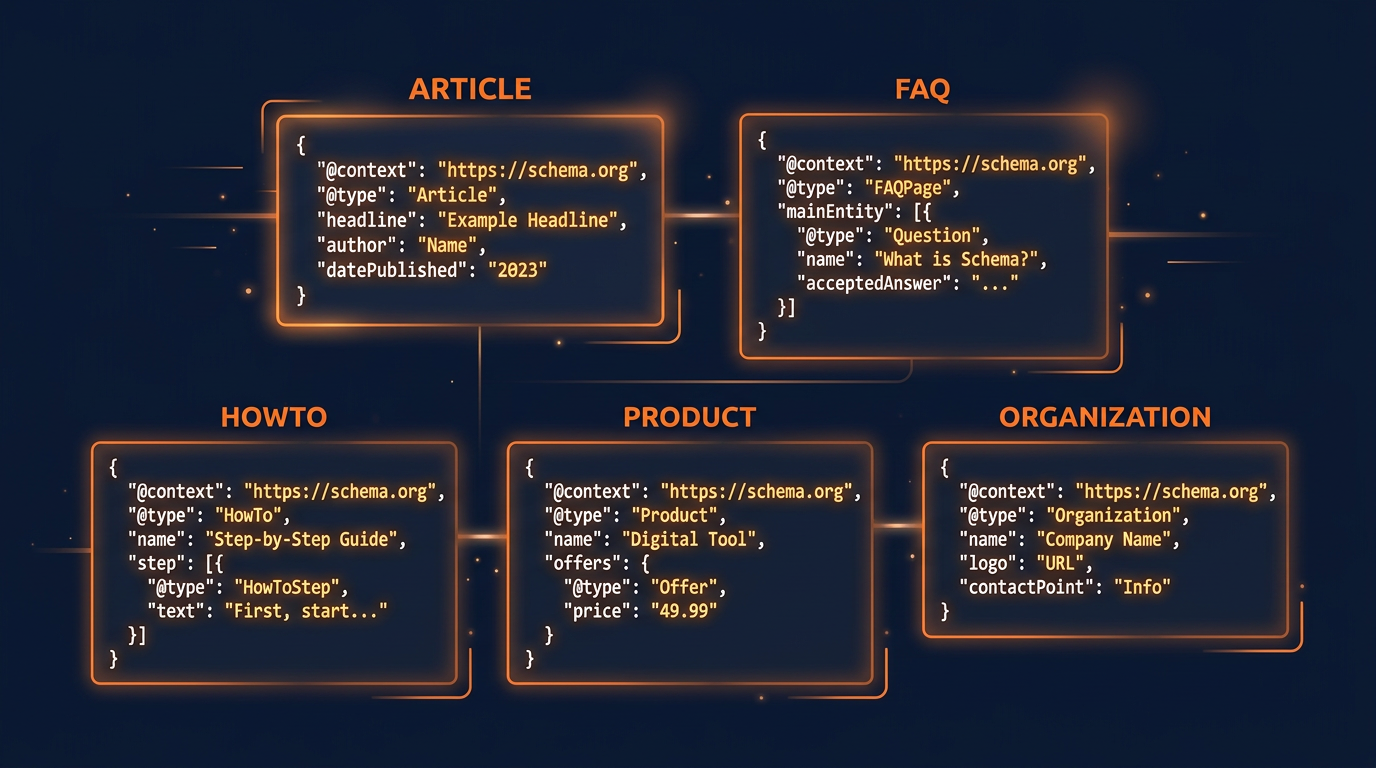
What is Schema Markup?
Schema markup is a standardized vocabulary (defined at schema.org) that you add to your web pages to help search engines and AI systems understand your content. Instead of AI having to guess what your page is about by reading the text, schema markup tells it directly.
For example, without schema markup, an AI crawler sees your page as a collection of HTML elements, text, and images. It has to figure out on its own that the page is a product review, who wrote it, what the rating is, and what product is being reviewed. With schema markup, all of this information is explicitly stated in machine-readable format.
There are three formats for adding schema markup: JSON-LD, Microdata, and RDFa. JSON-LD is the recommended format for AI SEO because:
Easiest to implement: JSON-LD goes in a separate script tag, so it does not mix with your HTML content.
Preferred by Google: Google officially recommends JSON-LD as the best format for structured data.
AI-friendly: JSON is the native data format for most AI systems, making it the easiest format for AI crawlers to parse and understand.
Easy to maintain: Since it is separate from your HTML, you can update schema markup without changing your page content or layout.
Why Schema Markup Matters for AI Search
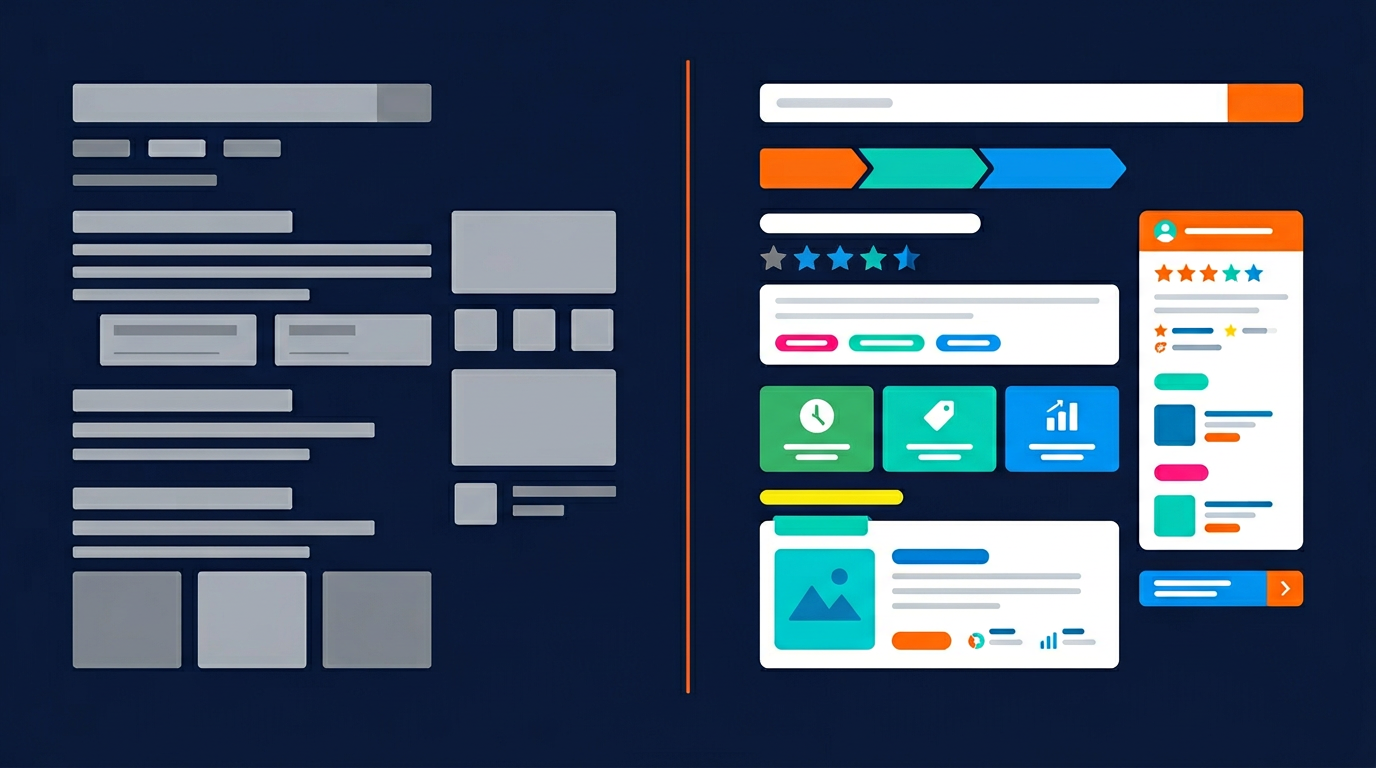
Traditional search engines like Google use schema markup primarily for rich snippets (star ratings, FAQ dropdowns, recipe cards). AI search engines use it for something much more important: understanding and citing your content accurately.
Here is how different AI platforms use structured data:
| AI Platform | How It Uses Schema |
|---|---|
| Google AI Overviews | Uses FAQ, HowTo, and Article schema to generate AI-powered answer boxes. Pages with schema are more likely to be featured. |
| ChatGPT Search | Uses Article and Organization schema to understand content authority and authorship when citing sources. |
| Perplexity AI | Parses structured data to extract facts, statistics, and answers for its citation-based responses. |
| Claude (Anthropic) | Uses structured data to better understand page context and content hierarchy during web research. |

Essential Schema Types for AI SEO
Not all schema types are equally important for AI search. Here are the six most impactful types, with ready-to-use JSON-LD examples for each:
1. Article Schema (for blog posts and news)
Article schema tells AI systems that your page is a written article. It provides details about the author, publisher, publication date, and topic. This is the most important schema type for content websites and blogs.
<script type="application/ld+json">
{
"@context": "https://schema.org",
"@type": "Article",
"headline": "Your Article Title",
"description": "A brief summary of the article",
"author": {
"@type": "Person",
"name": "Author Name",
"url": "https://authorwebsite.com"
},
"publisher": {
"@type": "Organization",
"name": "Your Site Name"
},
"datePublished": "2026-03-22",
"dateModified": "2026-03-22",
"image": "https://yoursite.com/image.jpg",
"mainEntityOfPage": "https://yoursite.com/article-url"
}
</script>
2. FAQ Schema (for question-answer content)
FAQ schema is extremely valuable for AI search. When AI engines encounter FAQ schema, they can directly extract question-answer pairs and use them in responses. This is one of the highest-impact schema types for Google AI Overviews in particular.
<script type="application/ld+json">
{
"@context": "https://schema.org",
"@type": "FAQPage",
"mainEntity": [
{
"@type": "Question",
"name": "What is schema markup?",
"acceptedAnswer": {
"@type": "Answer",
"text": "Schema markup is structured data..."
}
}
]
}
</script>
3. HowTo Schema (for tutorials and guides)
If your content teaches users how to do something, HowTo schema is essential. AI search engines frequently pull from HowTo-marked pages when answering procedural questions. This applies to guides like our robots.txt creation tutorial.
<script type="application/ld+json">
{
"@context": "https://schema.org",
"@type": "HowTo",
"name": "How to Create robots.txt for AI Bots",
"description": "Step-by-step guide...",
"step": [
{
"@type": "HowToStep",
"name": "Decide your AI bot strategy",
"text": "Choose whether to block all..."
},
{
"@type": "HowToStep",
"name": "Open a text editor",
"text": "Create a new file called robots.txt..."
}
]
}
</script>
4. Product Schema (for e-commerce)
Product schema helps AI search engines understand your product pages. This is increasingly important as AI shopping assistants like Google Shopping AI and Amazon Rufus become more popular.
<script type="application/ld+json">
{
"@context": "https://schema.org",
"@type": "Product",
"name": "Product Name",
"description": "Product description",
"image": "https://yoursite.com/product.jpg",
"offers": {
"@type": "Offer",
"price": "29.99",
"priceCurrency": "USD",
"availability": "https://schema.org/InStock"
},
"aggregateRating": {
"@type": "AggregateRating",
"ratingValue": "4.5",
"reviewCount": "127"
}
}
</script>
5. Organization Schema (for brand identity)
Organization schema tells AI systems about your brand, which helps establish authority and credibility. This is especially important for being cited as a trusted source.
<script type="application/ld+json">
{
"@context": "https://schema.org",
"@type": "Organization",
"name": "Your Company Name",
"url": "https://yoursite.com",
"logo": "https://yoursite.com/logo.png",
"description": "What your company does",
"sameAs": [
"https://twitter.com/yourcompany",
"https://linkedin.com/company/yourcompany"
]
}
</script>
6. Review Schema (for reviews and ratings)
Review schema helps AI search engines understand ratings and opinions on your pages. AI platforms frequently cite review data when users ask for recommendations.
How to Implement Schema Markup
There are several ways to add schema markup to your website, depending on your technical level and platform:
Manual implementation
Add a JSON-LD script tag to the <head> section of your HTML pages. This is the most flexible approach and gives you full control over the structured data.
WordPress plugins
Yoast SEO: Automatically adds Article, Organization, and breadcrumb schema. The premium version adds more schema types.
Rank Math: Includes a rich schema generator with support for FAQ, HowTo, Product, and many other types.
Schema Pro: A dedicated schema plugin with visual mapping and support for all major schema types.
Google's tools
Structured Data Markup Helper: A visual tool that helps you generate JSON-LD code by tagging elements on your page.
Rich Results Test: Tests your schema markup and shows how Google will interpret it. Essential for validation.
Search Console: Reports on schema errors and shows which rich results your pages are eligible for.
Schema Markup Best Practices for AI
Follow these best practices to maximize the impact of your schema markup on AI search citations:
Use multiple schema types per page. A blog post can have Article schema AND FAQ schema. A product page can have Product schema AND Review schema. More structured data gives AI more to work with.
Keep schema accurate. Schema markup must match the actual content on the page. Do not add FAQ schema for questions that are not on the page, or Product schema for non-product pages.
Include author and publisher info. AI systems use authorship data to assess content credibility. Always include author name, URL, and publisher information in your Article schema.
Add dates. Include both datePublished and dateModified. AI systems use these to assess content freshness, especially for AI SEO topics that change rapidly.
Validate regularly. Use Google's Rich Results Test to validate your schema. Invalid schema is ignored by AI systems, so errors directly reduce your AI citation potential.
Combine with llms.txt. For maximum AI discoverability, use both schema markup and an llms.txt file. Schema helps on individual pages, while llms.txt helps at the site level.
Common Schema Mistakes
Adding schema that does not match page content
Google can penalize sites for misleading schema. If your page is not actually a FAQ, do not add FAQ schema. AI systems also detect mismatches and may reduce trust in your content.
Using only Microdata instead of JSON-LD
While Microdata works, JSON-LD is significantly easier for AI systems to parse. If you are still using Microdata, consider migrating to JSON-LD for better AI search results.
Forgetting Organization schema on the homepage
Your homepage should always have Organization schema. This establishes your brand identity for AI systems and helps them associate your content with your organization across all pages.
Not updating dateModified
If you update a page but do not update the dateModified in your schema, AI systems think the content is older than it actually is. Always update this field when you make significant changes.
Complete AI Optimization Strategy
Schema markup is one piece of a comprehensive AI optimization strategy. Here is how all the pieces fit together:
Layer 1: AI Crawler Access (robots.txt)
Make sure the right AI crawlers can access your site. Use our homepage scanner to check and the Robots.txt Generator to configure.
Layer 2: Schema Markup (structured data)
Add JSON-LD schema to every important page. Use Article, FAQ, HowTo, Product, and Organization types as appropriate.
Layer 3: AI Discovery Files (llms.txt)
Create an llms.txt file that provides site-level information to AI systems about your content and expertise.
Layer 4: Content Quality
Write clear, factual, well-structured content with direct answers. Use data, statistics, and authoritative sources. Follow AI SEO best practices.
Key Takeaways
Schema markup helps AI search engines understand and cite your content accurately.
JSON-LD is the recommended format. Always use it over Microdata or RDFa.
The six most important types: Article, FAQ, HowTo, Product, Organization, and Review.
Use multiple schema types per page for maximum AI understanding.
Validate with Google's Rich Results Test and keep schema accurate and current.
Combine schema with proper AI crawler access, llms.txt, and quality content for the best results.
Check Your AI Crawler Access
Schema markup only works if AI crawlers can reach your pages. Verify your access now.
Scan Your Website Now